You have not skipped the gym twenty times this year because you ran out of hours. You skipped it because getting there required six decisions in a row and your system only had to fail at one of them to win. Pack the bag, drive there, find parking, wait for the machine, drive back, shower again. Six chances to quit before the workout even started.
That is not a time problem. That is a system with too many failure points, and calling it “no time” just lets you off the hook for building a better one.
The excuse survives because it sounds reasonable
The reason this excuse never gets challenged is that it sounds like a fact instead of a design flaw. Everyone has a version of it, so nobody questions it. This is the same pattern behind most excuses that survive contact with reality unchecked, and the fix is never more willpower. It is removing the decision points the excuse depends on.
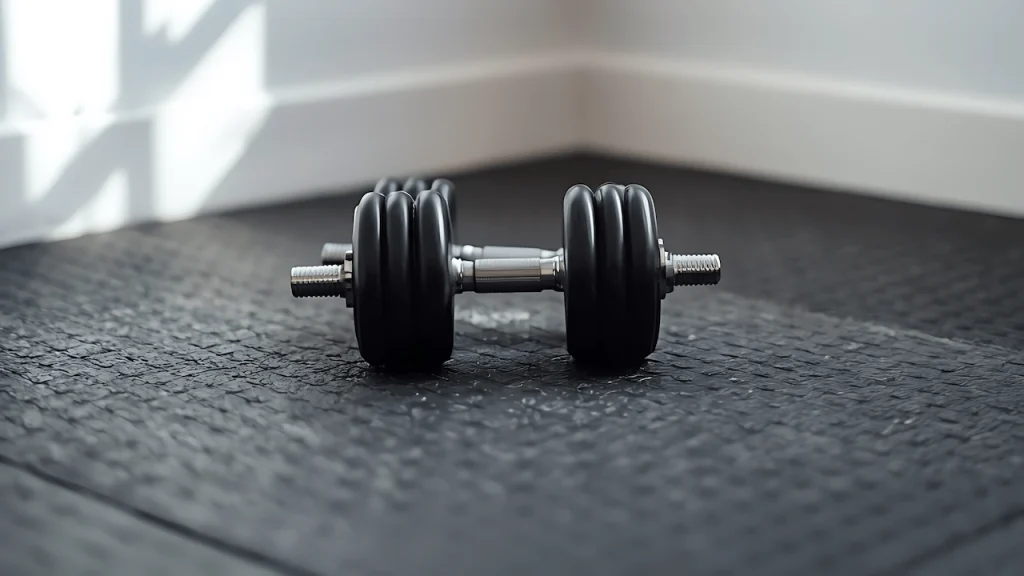
A home gym setup does exactly that. It does not make you more disciplined. It deletes five of the six decisions that were killing the workout before it started. What is left is one decision, walk to the corner of the room. That is a system a tired person can actually run.
The friction audit
Before buying anything, it helps to see exactly what the old system was asking of you. Commute time to and from a gym. Operating hours that do not match your schedule. The mental tax of paying for a membership you feel guilty not using. Decision fatigue about which machine is free, which class fits, whether today is even worth the drive.
A home gym setup does not need to solve all of this at once. It needs to solve enough of it that the excuse stops holding up. That is a much lower bar than most people think, which is why the equipment list below stays short on purpose.
This article has Amazon links. The obvious kind that connect to what we just talked about, not random products we pretend fit the system.
Buy through them = small commission for MomentumPath. Your price stays the same. Zero paid placements. Zero products picked because they sound impressive.
☕ Or just support directly and cut out the middleman.
The minimum viable setup
You do not need a spare room full of machines to remove the excuse. You need one piece of equipment versatile enough to cover most of what a full gym would have offered, sitting somewhere you walk past daily.
| Product | Key spec | Honest take |
|---|---|---|
| Bowflex SelectTech 552 adjustable dumbbells | 5 to 52.5 lbs per hand, dial adjustment | The single highest-leverage purchase here. One pair replaces fifteen sets of fixed dumbbells and covers most strength work a beginner to intermediate lifter needs. |
| PowerBlock Elite series | 5 to 50 lbs per hand, pin-select | Smaller footprint than the SelectTech line if floor space is the real constraint, though the block shape takes a session or two to get used to. |
| NordicTrack iSelect adjustable dumbbells | 5 to 50 lbs, voice or app-controlled adjustment | Costs more for the smart features. Worth it only if the friction you are actually solving is remembering to change weights mid-set, not space or price. |
Pick one. Adjustable dumbbells alone address the friction audit above better than any other single item, because they cover strength training across dozens of movements without needing a second purchase.
Building out from there
Once the habit holds for a few weeks, the next additions should still be justified by removing friction, not by chasing a “complete” setup that looks impressive and gets used twice.
| Product | Key spec | Honest take |
|---|---|---|
| Loop resistance bands (set of 5) | Varying resistance levels, portable | Covers mobility and accessory work the dumbbells do not, and takes up zero permanent floor space. |
| Over-the-door pull-up bar | No-drill mount, most standard door frames | Adds a full upper-body pulling movement the dumbbells cannot replicate well, at almost no cost. |
| Interlocking foam floor mats | Sold in packs, covers most home flooring | Protects the floor and gives the space a defined edge, which matters more for consistency than it sounds. A defined workout spot is a smaller decision to walk into than an undefined corner of a room. |
None of these are required to remove the original excuse. They exist to keep the system from adding friction back in as the habit grows.
Small space is not a real exception
“I don’t have room” is the second excuse that shows up once “no time” gets dismantled, and it collapses under the same logic. A home gym setup built around one pair of adjustable dumbbells, a set of bands, and a floor mat fits in a closet footprint. It does not need a spare room, a garage, or a dedicated space with a door that closes. It needs a corner that is always ready, which is a smaller ask than most people assume before they actually measure it.
What to actually do with the equipment
Buying the gear is the easy half. The habit that survives past week two is built the same way any habit sticks, starting small enough that skipping it feels dumber than doing it. That is the same micro-wins mechanism behind sustainable progress anywhere else in your system. Three or four compound movements, done consistently in the corner you already walk past, will outperform an ambitious program you abandon by week three.
If the habit itself keeps collapsing regardless of the equipment, that is a different problem than gear can solve, and worth addressing directly rather than assuming better equipment fixes it.
The excuse was never really about time. It was about how many chances your old system gave itself to fail before the workout even started. Fix the system, and the excuse stops having anything to stand on.