Size doesn’t determine whether something blocks you. Duration and posture do. Most people only watch for the heavy stuff, the big regrets, the major hurts, the obvious weight, and miss the thing that’s actually stalling them because it never looked big enough to count.
There are two different ways something small ends up costing you everything. They don’t feel the same while they’re happening, and they don’t get fixed the same way once you notice.
Two Failure Modes
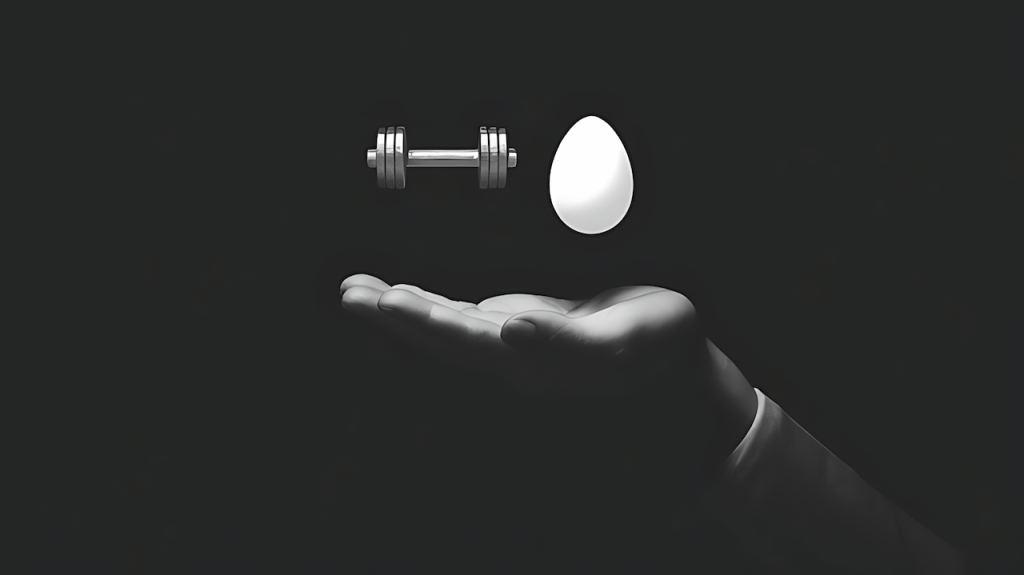
Take a five pound dumbbell. On its own it’s nothing, you’d forget you’re holding it within a minute. Now hold it above your head, or even just hold it out in front of you, without setting it down, for a week straight. It’s still five pounds the whole time. What changes isn’t the weight, it’s the duration. Held long enough, five pounds stops being light and starts being damage, and it hurts even at rest, because the body doesn’t measure load by the number, it measures load by how long the number has been sustained.
That’s the first failure mode: sustained load. The thing you’re carrying isn’t heavy enough to register as a problem, so you never put it down, and the cost compounds silently through time instead of through weight.
Now take an egg instead. It’s not heavy at all, but it demands something different: constant partial attention so it doesn’t break. Hold it for a month. Try sleeping while holding it. Within a few days you learn to work around it without thinking, you eat with one hand, you type with one hand, you find a way to function that quietly accepts the limitation as permanent. The adaptation feels like a skill you’ve built. It’s actually a capacity you’ve lost, and you won’t notice the loss until the moment you need both hands to function and discover you don’t have them.
That’s the second failure mode: fragile vigilance. Nothing about it hurts the way the dumbbell hurts. It just costs you flexibility you didn’t know you were spending, until the day the situation demands full capacity and you’re one hand short.
Why You Don’t Notice
Both of these are quiet by design, which is exactly why they outlast heavier, more obvious problems. Dumbbell pain gets dismissed because the weight itself sounds too small to justify the discomfort. You tell yourself it’s five pounds, it shouldn’t hurt this much, so something else must be wrong, when the actual answer is that duration alone was enough. Nobody warns you that light plus long enough equals heavy.
Egg-adaptation is even easier to miss because it doesn’t read as a cost at all. Getting good at working around a limitation looks and feels like competence. You get faster at the one-handed version of everything. From the inside, that looks like growth. From the outside, it’s a shrinking range of what you can actually do without thinking about it first, and that shrinkage stays invisible right up until you need the full range back.
Neither of these mechanisms announces itself as a block. They both look like normal function for as long as you’re accommodating them, which is the entire reason they last for years instead of days.
The Noise
Most content on carrying old hurt, regret, or emotional weight treats it as a self-care issue, something to release for the sake of peace of mind. That framing isn’t wrong exactly, it’s just optional-sounding, and optional-sounding things get deprioritized every single time something urgent shows up instead. Peace of mind loses to deadlines. A hard capacity constraint doesn’t.
The more accurate frame is mechanical, not emotional. What you’re carrying isn’t costing you serenity, it’s costing you hands. Reframed that way, putting it down stops being a wellness nice-to-have and becomes what it actually is: restoring function you’re going to need. This is the same blind spot behind doing everything right and still feeling wrecked: the load being measured is never the whole load actually being carried.
The Check
The fix depends entirely on which failure mode you’re actually running, and most people never separate the two before trying to address either.
If it’s dumbbell-type, the tell is that the discomfort is constant and gets worse the longer it’s sustained, even though nothing about the situation itself has changed or grown heavier. The fix is setting it down, fully, not managing it more efficiently. There’s no clever grip that makes indefinite overhead holding sustainable. The weight was never the problem. The refusal to put it down was. It’s the same pattern covered in why consistency alone doesn’t fix fatigue: doing the right maintenance on top of an unaddressed load doesn’t clear the load.
If it’s egg-type, the tell is different: you won’t feel pain, you’ll feel a strange sense of having quietly narrowed. Tasks that should be simple require workarounds you’ve stopped noticing as workarounds. The fix here isn’t dropping it suddenly, since eggs actually can break, it’s deliberately testing whether you still have the capacity you think you’ve lost, on purpose, before a moment forces the test on you without warning. That quiet narrowing is worth checking against the signs you’ve settled into survival mode without noticing, since the two show up the same way from the inside.
Run the check honestly. Is this draining you through duration, or is it costing you adaptation you haven’t priced in yet. The answer changes what you do next, and doing the wrong fix for the wrong failure mode just wastes the one chance you had to actually put it down. If you’ve already tried the obvious fixes and nothing moved, this covers what it means when small changes stop making a difference, because sometimes the change needed isn’t small at all.
Close
Growth doesn’t stall because of what’s heavy. It stalls because of what’s still in your hands, whether you’ve noticed it’s there or not.