Modern adult mindset problems are not new. What is new is how normalized they have become, how thoroughly the culture has built systems that reward dysfunction and call it identity. Most adults running broken mental patterns are not stupid. They are operating on a corrupted OS and nobody has handed them the diagnostic log.
That is what this post is. Fourteen essays, five failure modes, one argument: the problems are connected, and they share a root.
This is not a self-help post. There are no habits to build, no morning routines to adopt, no affirmations to repeat. This is a teardown. The kind that names what is actually happening before anything useful can be done about it.
The Operating System Metaphor
Your brain runs on an operating system. It is not the one you were born with. It is the one you built through every decision, every repeated behavior, every source you let shape your thinking. Most people never audit it. They just run whatever got installed and wonder why the outputs keep disappointing them.
A corrupted OS does not announce itself. It just produces bad results consistently, and the person running it finds explanations for each individual failure without ever looking at the underlying system. The job loss was bad luck. The relationship collapsed because of the other person. The money never materialized because the market was rigged. Each explanation might contain a grain of truth. None of them address the OS.
The posts linked throughout this page are the diagnostic log. Each one documents a specific failure mode in detail. This hub post names the pattern they share.
Failure Mode 1: Social Control (You Let the Internet Think For You)
The first failure mode is the most pervasive because it is the least visible. It does not feel like outsourcing your thinking. It feels like staying informed, staying aware, staying on the right side of things. The mechanism is the same regardless of the packaging: you have handed your cognitive bandwidth to external systems and you are running their outputs as your own conclusions.
Cancel culture is the clearest example of this. It is not a justice system. It is a control loop that punishes clarity and rewards fear. The moment you start filtering every thought through the question of how it will land with a hostile audience, you are no longer thinking. You are rehearsing. Your brain stops being a tool for analysis and becomes a PR department, spending processing power on threats that are not in the room and have no actual power over your life.
The fame generation took the same mechanism and built an identity around it. When your operating system runs on external validation, you do not develop discipline. You develop dependency. Recognition feels like progress. Visibility feels like impact. Neither one builds anything. The collapse arrives around the time reality stops cooperating with the performance, and the person who built everything on audience approval has no internal reference point left to fall back on.
Guru worship is the productivity version of the same trap. You are not building a system. You are buying one and calling it growth. The Notion dashboard with fourteen views and seven automations that tracks every habit except the habit of doing actual work is the most honest image of what this failure mode produces. The system is gorgeous. The deliverables are overdue. The person running it has outsourced their decision-making to someone who does not live their life, and they have called it optimization.
The common thread across all three: you stopped being the source of your own thinking. Someone else’s framework, someone else’s audience, someone else’s approval became the operating input. Everything downstream from that input is corrupted.
Failure Mode 2: Financial Delusion (You Confuse Performance With Building)
The second failure mode is what happens when the social control mechanism gets applied to money. The performance economy does not stop at identity. It bleeds directly into how people relate to wealth, spending, and financial reality.
Get-rich-quick thinking does not just waste money. It rewires the brain to reject the conditions required for actual wealth building. Discipline starts to feel slow. Consistency starts to feel inefficient. The person who has spent months chasing shortcuts now finds genuine long-cycle work uncomfortable at a neurological level. They have trained themselves out of the capacity for it. The damage is not financial. It is cognitive.
Real wealth does not perform for anyone. The loudest person in the room is usually the broke one. The person leasing the BMW to signal success is spending the compound growth that would have bought them actual freedom. Every dollar spent on proof is a dollar not working. The old money in the shoe store that nobody helped until the daughter pointed back at her father, that is the version of wealth that does not need to announce itself because it does not need external confirmation to exist.
Frugality, built correctly, is the same principle applied as a system. It is not deprivation. It is engineering. You buy high-caliber once and extract maximum utility per period. You rotate subscriptions instead of stacking them. You ride a phone until it stops working rather than chasing release cycles. The goal is not to spend less. The goal is to remove wasteful multiplicity and build a spending architecture that does not collapse every time a trend changes. Frugality makes you unreachable by trends. That is the point.
All three posts in this cluster document the same failure: treating money as an identity signal rather than a tool. The performance economy taught people to spend energy proving wealth while that same energy, redirected, would have built it.
Failure Mode 3: Responsibility Avoidance (You Would Rather Rot Than Own It)
The third failure mode is the one that causes the most direct damage to the people running it and everyone around them. It is also the one with the most elaborate cultural infrastructure supporting it.
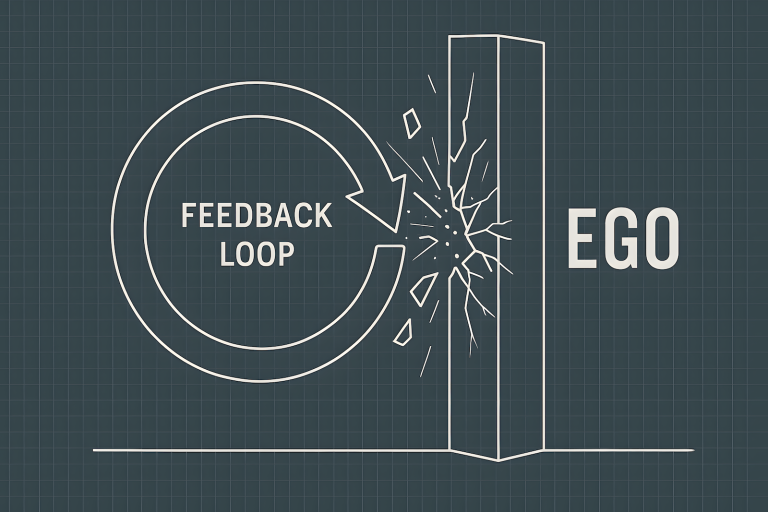
Accountability is the operating system. Without it, nothing else runs correctly. Excuses are not a backup system. They are a virus. Every time you explain a failure by pointing outward, you confirm to yourself that the locus of control is external. That confirmation makes the next failure more likely and the next excuse easier to reach for. The loop tightens. The person inside it stops being capable of growth not because they lack capacity, but because they have systematically disabled the feedback mechanism that growth requires.
Blame culture is that loop industrialized. Social media did not invent victimhood. It gave it an audience, a distribution network, and a reward system. The algorithm pays out for performed suffering. It pays out for outrage. It pays out for curated grievance. None of that output builds anything. It delays the only action that would actually move things forward, which is the honest question: what did I do, and what will I do differently?
Some people would rather rot than owe you. This is the most personal version of the failure mode. Accepting help from someone you have dismissed means admitting they had value you chose not to recognize. That admission is harder to swallow than the problem itself, so people sit in their mess and wait for a version of help that requires no acknowledgment of debt. It never comes. The pattern repeats until the gap between who they think they are and what they actually produce becomes too wide to maintain.
The withdrawal that follows is not punishment. It is calibration. When you stop helping people who have demonstrated they do not value your presence, you are not being cold. You are being accurate. Your resources belong where they are actually respected.
Failure Mode 4: Effort Misdirection (You Work Hard at the Wrong Things)
The fourth failure mode is the most socially acceptable because it looks like virtue from the outside. Working hard is admired. Caring about quality is admired. Neither of those observations helps you when the effort is pointed in the wrong direction.
Perfectionism is ego, not excellence. The person who keeps polishing because they are afraid of what feedback might expose is not protecting standards. They are protecting themselves. The work that never ships never gets tested, never gets broken, never gets rebuilt into something that actually works. Excellence comes from iteration. Perfectionism kills iteration speed and calls the delay standards. If your process cannot survive real-world friction, it is not excellence. It is decoration.
Hustle is linear. You put in more hours, you get more output, up to the ceiling of your personal capacity, and then the system collapses. Education compounds. You learn something once and it generates value for years. By year three, the person who has been learning and building depth is in a different category from the person who has been grinding. By year five, it is not even close. The economy is not structured to reward hustle. It is structured to reward clarity and leverage. Hustle just feels urgent, which is why people keep choosing it.
The common thread is mistaking activity for progress. Polishing a thing that does not need more polish is activity. Working harder at a linear system instead of building a compounding one is activity. Both feel productive. Neither produces the output the person actually wants.
Failure Mode 5: Digital Behavior (You Treat Permanence Like a Mood)
The fifth failure mode is where all the others play out in public, and where the evidence accumulates permanently whether the person realizes it or not.
The internet never forgets. It only waits. Every comment can be detached from its original context. Every sentence can be screenshot without tone or intent. Every emotional moment you published becomes an artifact that outlasts your opinion of it. The risk is not being wrong. The risk is being right in the wrong emotional moment and having that moment preserved forever. Digital restraint is not weakness. It is risk management. Your digital identity is infrastructure, not a mood board.
Crowdsourcing your pain will not fix it. Posting a problem is not processing a problem. Processing means sitting with what happened, understanding your role in it, identifying what is within your control, and deciding what to do next. Posting means presenting a curated version of events to an audience selected for their likelihood of agreeing with you. The audience gives you frictionless sympathy that costs them nothing and carries no weight. The problem is still there after the reactions come in. The only variable is whether you did anything useful in between.
Silence is sometimes the strongest move available. Not the silence that withholds acknowledgment to punish or manipulate. The silence that arrives when a decision is already made and continuing the exchange would cost energy without changing anything. When you stop rescuing conversations that were never going to resolve, you stop generating artifacts you will need to explain later. You also stop handing ammunition to people who have already decided who you are. Silence with clarity is final. Silence without a decision is just stalling. Knowing the difference is the skill.
Modern Adult Mindset Problems Have a Common Root
Five failure modes, fourteen posts, one pattern. Every single failure mode described above shares the same origin: external dependency. Worth measured through other people’s eyes. Choices filtered through other people’s frameworks. Progress tracked through other people’s reactions.
The person running social control as their primary operating input has handed their thinking to the crowd. The person performing wealth instead of building it has handed their financial identity to strangers who will never see their bank account. The person running blame culture as an OS has handed the locus of control to everyone except themselves. The perfectionist has handed their work to the fear of what critics might say. The person crowdsourcing their pain has handed their problem-solving to an audience that cannot solve it.
Remove the external dependency and all five failure modes lose their fuel. That does not mean becoming indifferent to other people or removing yourself from the world. It means building an internal reference system that functions without requiring external confirmation to operate. You know what you are building and why. You know what your work is worth and what it still needs. You know where the failure was and what you will do differently. You know when a conversation is finished and when silence is the more precise response.
That internal system is what the Unhacked posts on MomentumPath are building toward. Not a mindset. Not a framework. An operating system that runs on your own data.
Pick the failure mode that hit closest to home. The post on it is linked above. That is the place to start.