The grooming session ran three to four hours and nobody complained. Not because the team had nothing else to do. Because everyone in the room had something real to contribute and they knew it.
That is a rarer condition than most teams realize. The format of a grooming session is easy to copy. The culture that makes a four-hour grooming session productive rather than exhausting is not. Most teams that try to run collaborative sprint planning end up with long meetings where two people do the actual work and everyone else waits for their part. What I experienced working with a cross-functional team was different and it took a while after leaving to understand why.
Cross-functional team dynamics in a small startup are not primarily a process problem. They are a culture problem. The process is the surface. The culture is what determines whether the process works or just runs.
What the Team Actually Looked Like
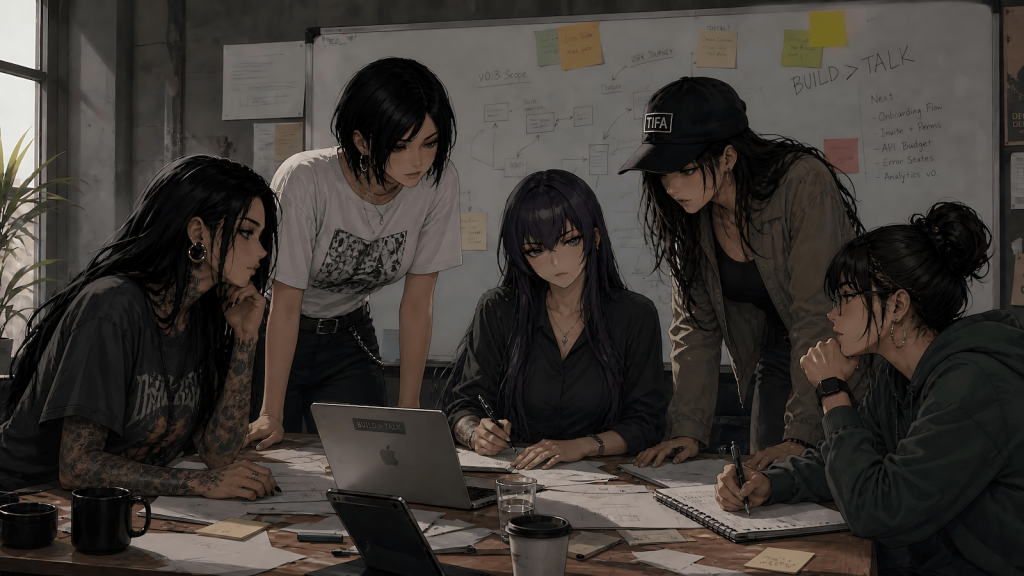
The structure was clean. The PO surfaced what the business needed. The PM decided what went into the sprint based on capacity, priority, and dependency. The dev lead managed his team’s bandwidth and flagged technical constraints. The QA lead, which was me, raised coverage gaps and risk and deferred to the PM on final prioritization. Everyone had a lane. Nobody was crossing into someone else’s lane to compensate for a gap. Nobody was protecting their lane out of insecurity.
What made it work was not that structure. Plenty of teams have that structure on paper and still run broken sprints. What made it work was that everyone in the room understood enough of what the person in the next seat was actually responsible for to contribute meaningfully to decisions that were not technically theirs to make.
The PO understood enough about development constraints to frame requests in ways the dev lead could work with. The PM understood enough about QA coverage to know when a sprint was being loaded in a way that would compromise testing time. The dev lead understood enough about product goals to push back on scope in terms of user impact, not just technical complexity. And QA understood enough about all of it to ask the questions that surfaced the dependencies nobody had mapped yet.
That is not a Scrum certification outcome. That is what happens when a team has been working together long enough, with enough trust, in an environment that rewards contribution over territory.
The Culture Underneath the Process
The meetings worked because the environment worked. When a team genuinely takes care of its people, wearing multiple hats does not feel like exploitation. It feels like contribution. You do the work outside your job description because the product matters, the team matters, and the environment makes it safe to invest that way.
The micromanaging kills momentum post covers what happens when the culture underneath a team goes wrong in a specific way. The inverse of that dynamic is what made my team’s sprints work. Nobody was checking whether you were doing your job. Everyone was trusted to know their job and bring their judgment to the table.
That trust is the variable most cross-functional team frameworks do not account for. You can implement every process recommendation from every Agile textbook and still run a broken team if the underlying environment does not make it safe to contribute outside your lane, flag a risk that is not technically your problem, or defer to someone else’s judgment on a decision that affects your work.
Trust is not a soft outcome of good process. It is a prerequisite for good process to function.
Why Everyone Knowing Enough Changes Everything
In most sprint setups, the QA engineer shows up to grooming to give test estimates and leaves the rest of the discussion to the people who own those decisions. That is fine as far as it goes. But a QA engineer who understands the business context of a feature can ask why the edge case the developer de-scoped matters to the user. A QA engineer who understands development constraints can frame a coverage concern in terms of technical risk rather than test count. A QA engineer who understands Scrum can identify when the sprint is being planned in a way that will fail at the execution stage and say so during planning rather than during the retrospective.
None of that requires a QA engineer to become a PM or a developer or a Scrum Master. It requires enough working knowledge of each discipline to know where the quality risks live inside each one. The QA discipline and job security post covers what that looks like from the QA side when the roles start to overlap officially rather than just in practice.
The same principle applies to every role on the team. A PM who understands enough about testing to know what a coverage gap costs in production makes better sprint prioritization calls. A developer who understands enough about product goals to know why a feature matters builds fewer things that technically work but miss the point. A PO who understands enough about technical constraints to frame requirements in buildable terms wastes fewer cycles on scope that cannot survive contact with the architecture.
This is not about everyone doing everyone else’s job. It is about everyone knowing enough of everyone else’s job to make their own job better.
What This Looks Like When It Breaks
The absence of this dynamic is visible in specific ways. The sprint planning meeting where only the PM and the dev lead are actually deciding anything. The retrospective where the QA team raises a coverage gap that could have been caught in grooming if anyone had asked. The feature that ships with a business logic error because the developer built exactly what was specified and the specification did not account for the user behavior that actually happens.
These are not failures of process. They are failures of cross-discipline awareness. The process ran correctly. The people inside the process did not have enough context in adjacent disciplines to catch what the process missed.
Remote teams have an additional layer of this problem because the informal knowledge transfer that happens in an office, the conversation after the meeting, the question asked while passing someone’s desk, does not happen automatically. The async task management etiquette post on RWH covers how distributed teams can build those communication bridges deliberately rather than hoping they happen organically.
You Cannot Copy the Format Without the Culture
The most common mistake teams make when trying to build this kind of collaborative dynamic is importing the format without addressing the culture. They run longer grooming sessions. They invite everyone to planning. They ask for input from each discipline. And they get long meetings where two people do the work and everyone else waits for their part, because the environment has not given people a reason to invest outside their lane.
The format is the easy part. The culture is the work. Build an environment where contribution is valued and territory is not, where trust is the operating condition rather than the reward for performance, where people are taken care of well enough that wearing multiple hats feels like investment rather than exploitation. The grooming sessions will take care of themselves.