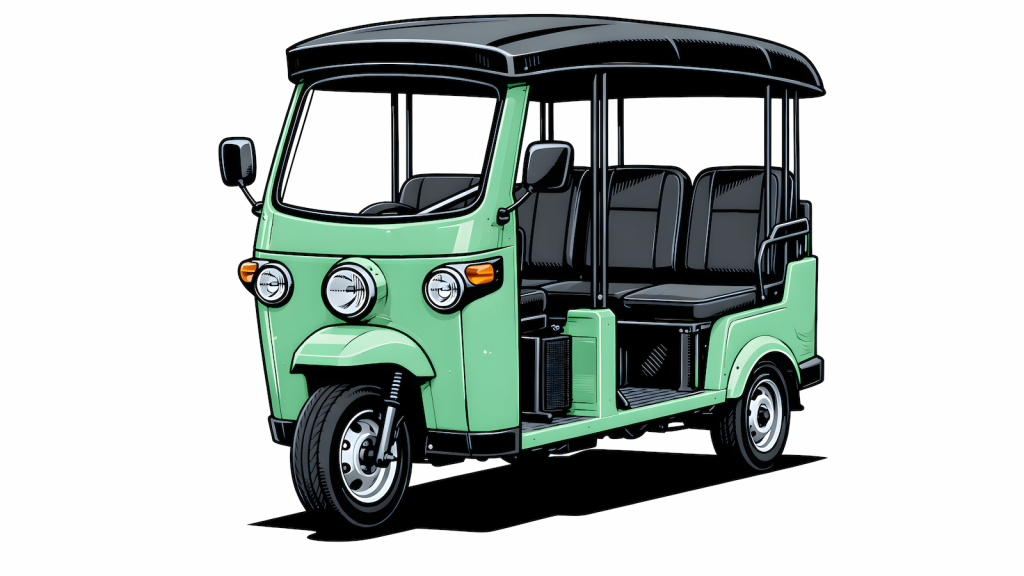
On mornings when I drive my daughter to school on my e-trike, the pattern repeats.
I stick to the side of the road when there’s space. On single-lane roads, I take the lane like any other vehicle should. I use my side mirrors. I signal before turns. I don’t counter-flow. I don’t sneak to the right then cut left at intersections.
Thirty years of defensive driving, all ingrained.
But the horns still come. Cars still overtake aggressively. Drivers still get visibly annoyed that I exist on the road at all.
Because I’m on an e-trike, none of that matters.
I can feel the judgment radiating through their windshields.
After 30 years of driving in the Philippines, navigating counterflow, broken traffic lights, and the unwritten chaos of Metro Manila roads, I’ve learned one critical survival skill: let them pass.
Not because I’m slow. Not because I’m scared. Because I know what I’m doing, and I don’t need to prove it to strangers who’ll forget me in 30 seconds.
The e-trike gets my daughter to school. It saves gas money. It reduces pollution. It’s not built for racing. It’s built for utility.
And that’s exactly the point most people miss about wealth, status, and what actually matters.
The Poorest People Try to Look Rich
Here’s the pattern: the people most desperate to look wealthy are usually the ones who aren’t.
They rent luxury cars for Instagram posts. They buy designer bags on payment plans. They perform wealth because they don’t have the real thing, so the performance becomes their entire identity.
Meanwhile, Christian Bale drives a 2003 Toyota Tacoma.
When an interviewer asked why he was still driving an old truck when he could afford anything, his response centered on a simple principle: it works, it’s reliable, and rarely breaks down.
Why buy something new when the old one still does the job?
That’s not frugality. That’s clarity.
He’s not depriving himself. He’s asking the only question that matters: does this serve me, or am I serving it?
The same logic applies to the old businessman I read about years ago, still using a basic Nokia when smartphones were everywhere. When clients asked why he hadn’t upgraded, he said: “I can still make calls. I can still receive texts. Why would I buy a new one?”
The rebuttal: “But you have the money.”
His response: “Yeah. I do. But this one still works.”
That’s the energy. Not cheap. Not outdated. Just unbothered by the noise.
My Own Shift: From Performance Dreams to Practical Reality
When I was younger, I dreamed about flashy cars – the kind you see in movies and racing games. The whole tuner culture appealed to me: modified everything, aggressive styling, pure performance.
Then I started actually driving and maintaining vehicles. Reality taught me what fantasy couldn’t: upkeep costs, insurance premiums, fuel economy. The gap between wanting something and affording to keep it running.
I wrote about that entire journey and what it taught me about real wealth, but the key lesson was simple: the dream shifted from “what looks impressive” to “what actually serves my life.”
I’ve been driving a 2008 Hyundai Tucson for years. It’s not flashy. It’s not new. But it’s reliable, and it does what I need without bleeding me dry.
Do I still love cars? Absolutely.
I’d love a matte gray Land Rover Defender 110, the ’90s version, not the new one. Or a matte black BMW E30 as a project car.
But those are surplus goals, not necessities. I’ll get them when the real priorities are handled: kids’ college tuition covered, emergency fund solid, business stable and generating without constant fire-drills, bills automated, savings in place.
When those boxes are checked, then the project cars become fun, not sacrifice.
That’s the difference between getting old rich money and fake rich performance.
The E-Trike Test: Can You Operate Under Judgment?
Every time this happens, the pattern goes deeper than just traffic annoyance.
E-trikes have a bad reputation in the Philippines. People see one and immediately assume: no registration, no license, bad driver, road hazard.
The irony? I have a valid driver’s license and 30 years of driving experience. My cars are registered. But my e-trike isn’t, because the regulatory framework for e-trikes is still murky, and the cost-benefit doesn’t make sense for what’s essentially a neighborhood utility vehicle.
Does that make me a bad driver? No.
But here’s what nobody talks about: the same violations people blame on e-trikes happen daily in expensive cars.
Counter-flow? I see it from BMWs, Ford Raptors, and most especially motorcycles more than e-trikes.
Expired registration? Happens across all vehicle classes.
Reckless driving? Status symbols don’t make you competent.
But when an e-trike does it, suddenly it’s a “cheap vehicle problem.” When a Raptor does it, nobody generalizes all Raptor drivers as idiots.
The difference isn’t the behavior. It’s the status signal.
I learned defensive driving the hard way, navigating Metro Manila’s chaos where one mistake can be fatal. I follow traffic rules because I’ve seen what happens when you don’t.
Yet the moment I’m on an e-trike, I’m lumped into the “unlearned idiot” category by drivers who assume that because e-trikes don’t require a license or registration, everyone riding one must be incompetent. The fact that you can’t get ticketed for violations just reinforces that assumption, though regulations are updating to restrict e-trikes from national roads.
But the assumption ignores the reality: plenty of licensed, experienced drivers use e-trikes for practical reasons. And plenty of reckless drivers operate vehicles that do require licenses.
That’s not a traffic problem. That’s a status problem.
Here’s what I didn’t do:
Speed up to prove I’m a “real driver.” Feel embarrassed about my vehicle choice. Start second-guessing whether I should’ve just driven the Tucson to avoid the judgment.
Because I know why I’m on the e-trike. I know what it does for me. I know it’s the right call for this situation.
And the opinions of drivers who judge competence by vehicle price? Irrelevant.
That’s not arrogance. That’s operating mindset under social pressure.
Most people can’t do this. They crack the moment someone honks, someone judges, someone assumes they “can’t afford better.”
Or worse, they don’t even register the judgment. They violate traffic rules because they genuinely don’t know better. They’re unlicensed, inexperienced, or just don’t care that they share the road with everyone else.
That’s the critical difference: licensed, experienced drivers operating e-trikes for utility versus unlicensed riders who don’t understand road rules or defensive driving.
The problem is, people lump both groups together and assume everyone on an e-trike falls into the second category.
Some drivers see a small vehicle and think: “Poor. Ignorant. Get out of my way.”
Others are just selfish. They don’t acknowledge that roads are shared space. They think their expensive car gives them priority.
But neither group stops to consider that the person on the e-trike might have 30 years of driving experience and is making a deliberate, practical choice.
They start performing. Defending. Justifying.
But real confidence doesn’t need a defense. It just operates.
The “Why?” Filter
This all comes down to one question: why?
Why buy the new phone when the old one still works? Why upgrade the car when the current one is reliable? Why spend on status when you could invest in stability?
Christian Bale asked it. The Nokia businessman asked it. I ask it every time I’m tempted by something shiny.
And here’s the thing, most people can’t answer “why” without defaulting to social proof: “Because everyone else has it.” “Because people will think I’m successful.” “Because I don’t want to look broke.”
None of those answers are about you. They’re about performing for an imaginary audience that doesn’t care about your financial stability.
The “Why?” filter strips that away.
It forces you to separate what serves your life from what serves your image.
Growing Up Frugal: The Foundation
My parents raised me to value every peso. My college buddies called me kuripot – Filipino for cheap or stingy. The teasing stung, but it built something more valuable: a mental firewall against financial manipulation.
I explored how that frugal foundation became my operating system in detail, but here’s what matters for this situation: that early training, combined with 30 years of knowing road rules and defensive driving, is why I don’t flinch when someone honks at my e-trike.
I already know what I’m doing. I know the rules. I don’t need external validation to keep doing it.
While my friends were buying status symbols and living paycheck to paycheck, I was learning to build systems that last. I don’t get easily tempted by get-rich-quick schemes or flashy investments. I don’t panic when trends shift.
And I don’t change my behavior when strangers judge my vehicle choices.
The Confidence to Not Perform
Here’s what most people don’t understand: choosing utility over status requires confidence.
It’s easy to buy the flashy car when you’re insecure. You’re outsourcing your self-worth to the vehicle.
It’s hard to drive the old reliable when everyone around you is flexing, because you have to be secure enough to withstand the judgment.
That’s the test.
Can you operate when the world is honking? When people assume you’re broke? When your choice gets mistaken for inability instead of intention?
If you can’t, you’re still running performance firmware.
You’re still letting external pressure dictate internal decisions.
And that’s expensive, not just financially, but mentally.
What I’m Building Toward
Right now, I drive a 2008 Tucson. I take my daughter to school on an e-trike.
I look at the 2025 Hyundai Santa Fe and Tucson with their aggressive, beast-like styling. I appreciate the design. I’d love to drive one.
But I’m not chasing it.
Because I’m focused on building something more important: financial stability where emergencies don’t wreck me, a business that runs without constant fire-drills, kids’ education fully funded, savings automated and growing.
When those are locked in, when the real priorities are handled, then I can think about the matte gray Defender 110 or the matte black E30.
Not as proof of success. As surplus from stability.
That’s old rich money thinking.
Not “fake it till you make it.” Not “look successful to become successful.”
Just: build real. Perform never.
The System That Outlasts the Honking
Here’s the operational truth: every dollar you spend proving your worth to strangers is a dollar that doesn’t work for your actual life.
Every hour you invest curating a wealthy image is an hour stolen from wealth-building activities.
The math is brutal. The psychology is even worse.
Because once you start performing, you train your brain to equate spending with success. And that neural pathway gets harder to break with each transaction.
But if you build the opposite system, utility over image, function over flash, stability over status, you create something the performers never get: freedom.
Freedom to drive slow when everyone else is speeding.
Freedom to choose what serves you, regardless of what it signals.
Freedom to let them honk, let them pass, and keep moving at your own pace.
Because you know where you’re going. And you don’t need their validation to get there.
Final Check: Which OS Are You Running?
Ask yourself:
When someone judges your choice, do you defend it or ignore it?
When you buy something, is it for you or for the imagined audience?
When the world honks, do you speed up to prove yourself, or stay your course?
If your answers depend on external approval, you’re still running status performance firmware.
Switch it.
Because real wealth, real confidence, doesn’t honk back.
It just keeps moving.

30 Years of Defensive Driving & Status Signal Immunity
I drive a 2008 Tucson and an e-trike while building systems that outlast the honking. If you’re tired of performing wealth for strangers who don’t care about your actual stability, this is where you learn to operate under pressure without flinching.
Check out the Syndication on Medium and on Facebook.
Support the work — real wealth doesn’t need proof, but coffee helps
Your support keeps this content running on utility, not status performance.